Frozen Egg Finds: From Chill to Thrill, Unleashing Winter's Edible Surprises!
- chickadeeridgefarm
- Jan 17, 2024
- 1 min read

Updated: Feb 10, 2024
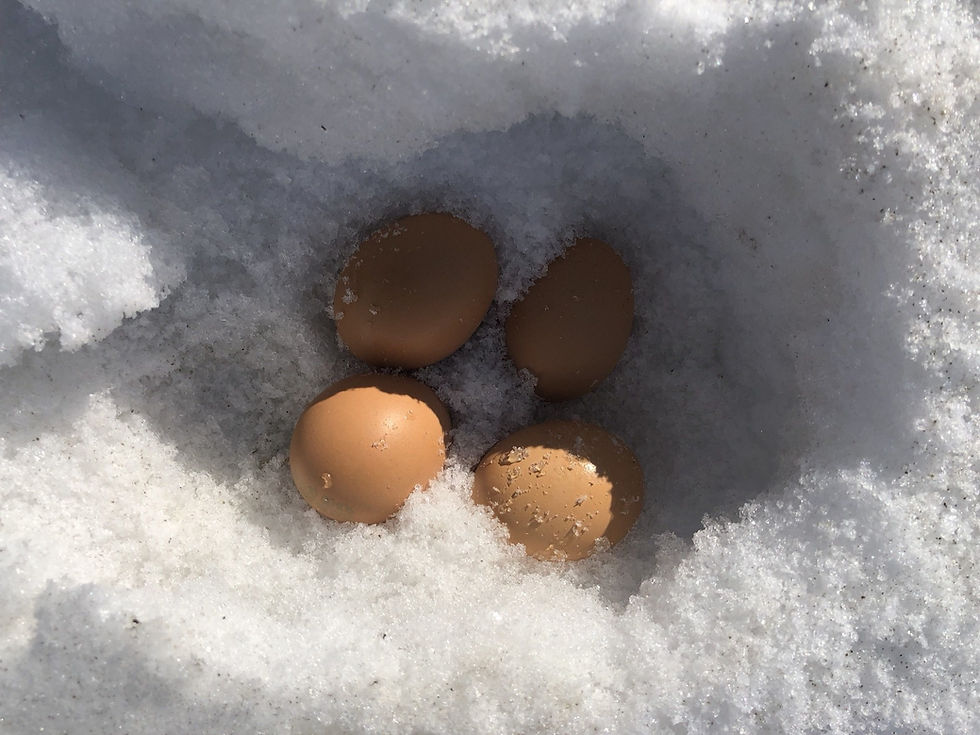
I am not a food safety expert, but consuming a frozen egg that was laid outside carries potential risks. When an egg freezes, the water content inside expands, potentially causing the shell to crack. If the shell is compromised, bacteria can enter the egg, posing a risk of contamination.
To determine whether the frozen egg is safe to eat, consider the following guidelines:
1. Check for Cracks:
Inspect the egg for any cracks or damage to the shell. If the shell is intact, it reduces the likelihood of bacteria entering.
2. Thaw Properly:
If you decide to thaw the egg, do so in the refrigerator rather than at room temperature. Slow, controlled thawing can help minimize the risk of bacterial growth.
3. Use Caution:
Exercise caution when handling the egg, and be aware that freezing may affect its texture and quality. If you notice any unusual odors or discoloration upon thawing, it's best to discard the egg.
4. Consider Cooking:
Cooking the egg thoroughly can reduce the risk of foodborne illness. Make sure the egg reaches a safe internal temperature, and avoid consuming raw or undercooked eggs.
It's crucial to prioritize food safety and, when in doubt, err on the side of caution. If you have concerns about the safety of the frozen egg, it may be safer to discard it and opt for fresh eggs from a reliable source. Always follow recommended food safety practices to ensure the well-being of those consuming the food. If you have specific concerns, consulting with a food safety expert or healthcare professional is advisable.


Comments